Safaris and Tours in Namibia, Botswana & South Africa
 
Safaris and Tours in Namibia, Botswana & South Africa  
Safaris and Tours in Namibia, Botswana & South Africa Safaris and Tours in Namibia, Botswana & South Africa Safaris and Tours in Namibia, Botswana & South Africa  
:: Home
Safaris and Tours in Namibia, Botswana & South Africa Safaris and Tours in Namibia, Botswana & South Africa Safaris and Tours in Namibia, Botswana & South Africa
 

:: Home
:: Specials
:: Newsletter
:: Gallery
:: Guest Book
:: Currency Converter
:: Bird & Animal Checklists
:: Links
:: Contact Us
Safaris and Tours in Namibia, Botswana & South Africa

:: Map

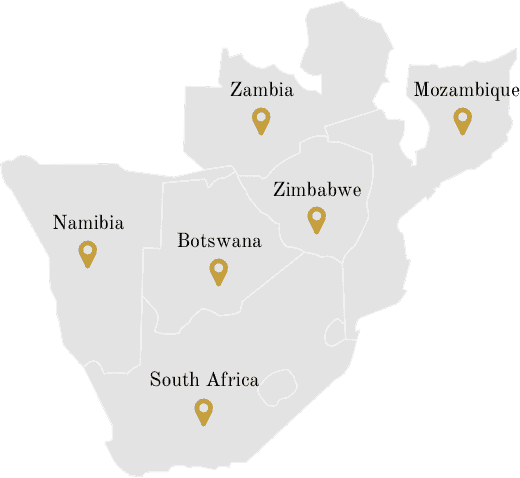
Click on the map below to view other destinations >>

tours


:: Botswana

:: Botswana Holidays

:: Country Highlights
:: Country Background
Safaris and Tours in Namibia, Botswana & South Africa Environment Safaris and Tours in Namibia, Botswana & South Africa Politics & Economics
Safaris and Tours in Namibia, Botswana & South Africa History & Culture Safaris and Tours in Namibia, Botswana & South Africa Useful Info


:: Botswana at a glance

Click on the images below >>

Safaris and Tours in Namibia, Botswana & South Africa Safaris and Tours in Namibia, Botswana & South Africa

:: Botswana Background

History & Culture

Safaris and Tours in Namibia, Botswana & South Africa

No accurate records exist of the first ever inhabitants of Botswana, although tool fragments and other evidence of human activity have been uncovered which are thought to be around 27,000 years old. The Basarwa, also known as San Bushmen, were among the first recognised people to inhabit the country although only 40,000 remain today.

The 17th Century brought the Tswana, or Batswana from the South, a Bantu people related to the Sotho of Transvaal and Lesotho.The Tswana now make up over 50% of Botswana's population and the remaining peoples have been heavily absorbed into this culture.This may be one of the main reasons for Botswana's cultural and social stability over the last two centuries.


As well as the San, minority tribes include the 25,000 Mbanderu, cousins of the Namibian Herero tribe who fled Namibia following the German conquest in the 1890's. The striking traditional costume of these people with large flowing skirts and elaborate headdresses is based on that of the 19th century missionaries wives.

The largest minority is the Kalanga tribe, related to the Karanga-Rozwi from Zimbabwe, thought to be the constructors of the Great Zimbabwe ruins. Unlike the Tswana who keep many cattle for commercial use, the Kalanga keep them only for social and religious reasons and live in small farming communities.

The Bayei and the Hambukushu were the original inhabitants of the Okavango Delta. Both tribes moved south in the 18th century to escape Lozi tribal oppression in Zambia. The Bayei were the first to migrate. Traditional fishermen, they are responsible for introducing the wooden mokoro, or canoe, which is still seen in some areas of the Delta today. They fished mainly in the shallow water areas and poled their mekoro with long sticks called ngashis. They also hunted in large groups for hippo using spears. The Hambukushu moved south a little later and fished mainly in the deeper waters using paddles to manoeuvre their mekoro. They relied more on the soil for sustenance than the Bayei.

Botswana has never been colonised, but it has been heavily influenced by the surrounding countries and by England whose protection was sought in the 1880's. The London Missionary Society (LMS) established a presence in Botswana in the 1820's with Robert Moffat as the main force behind the mission's work. Moffat was the first person to record a written version of the Tswana language, in the Roman alphabet. The LMS maintained a benign and rather paternal role and the Tswana approached the society for advice in the 1870's when the South African Boer population threatened to encroach from the South.

The LMS supported Tswana opposition to the Boers and a delegation of chiefs were granted protection from the British crown in 1883. The protectorate was known as Becuanaland. The initial protectorate was extended northwards in 1885, but in the 1890's Cecil Rhodes began to be interested in gaining control of the area as part of his ambitious British South Africa Society scheme to control the whole of Africa from Cape to Cairo. Chief Khama II led a delegation to London and gained assurance that Becuanaland would receive the continued protection of the British crown. A strip of land to the east of the country, in the Tuli block, was, however, conceded to the BSA company in order to work on the Cape to Cairo railway.

Complete independence was sought and gained in 1966 and the first president was Sir Seretse Khama who had studied in England and married an English woman named Ruth. He ruled until his death in 1980 when his colleague and co-founder of the Botswana Democratic Party, Dr. Quett Masire took over. Festus Mogae is the current president and Sir Khama's son Ian is the present prime minister.

Today, Botswana's population numbers around 1.6 million with 80% living in the fertile eastern areas near the borders with Zimbabwe and South Africa. The growth rate is high at around 3.4% and over 50% of the population are under 16 years old. Most people live in central villages surrounded by widely spaced cattle posts which the men tend for the majority of their time. Many younger people are drifting towards the two cities and smaller towns in search of employment, unfortunately this is limited and unemployment is a growing concern. Life expectancy is now 37 for men and 39 for women. This has fallen from around 65 in 1995, largely due to the AIDS pandemic. Setswana is the countries' national language while English is the official language.

The capital city is Gaborone in the South with a population of 145,000. Gaborone has a university, the National Assembly chambers, museum, gallery and international airport. The second city is Francistown near the Zimbabwean border with a population of 70,000. This is the most industrialised city and was formed around gold prospecting. Industry is now based on textiles, knitwear, plastics and shoes. Maun is the town at the base of the Delta and is the starting point for most of Botswana's safari tours. The name means "place of reeds" and the town is rapidly growing from a one street frontier settlement to a bustling centre of tourism. The population today is approximately 30,000; around 2,000 of which are ex-patriot employees of the tourism industry. Kasane is the other starting point for delta safaris, and is located in the north, 70km from Victoria Falls. Considerably smaller than Maun it does have a modern and busy airport, and being located on the fertile floodplain of the Chobe river Kasane is the one place in Botswana where limited agriculture occurs.

  Back to top safari


Safaris and Tours in Namibia, Botswana & South Africa Safaris and Tours in Namibia, Botswana & South Africa Safaris and Tours in Namibia, Botswana & South Africa Safaris and Tours in Namibia, Botswana & South Africa